Raja Sunkara
Ph.D. Candidate in Computer Science.
I am a second year PhD student in the Computer Science department at Missouri S&T, advised by Prof. Ardhendu Tripathy. Additionally, I am a member of the Statistical Machine Learning Lab. My research interests broadly include machine learning, signal processing, and optimization. Currently, I am working on developing sequential decision making algorithms for multi-armed bandits and black-box optimization.
Previously, I obtained my Master’s thesis from Missouri S&T under the guidance of Prof. Thomas Tie Luo. I earned my Bachelor’s degree in Aerospace Engineering from the Indian Institute of Technology, Madras, where my thesis project was supervised by Prof. Ranjith Mohan. In industry, I worked as a Data Analyst, Data Scientist, Research Engineer, and R&D Data Scientist at Enfrien Innovations, Agrometrics, Matdun Labs, and Alcon, respectively.
CV
news
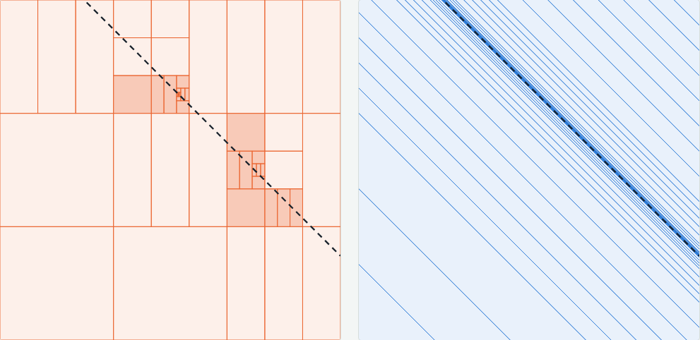
| Oct 16, 2026 | Our ICML 2025 paper, Adaptive Partitioning Schemes for Optimistic Optimization, is now on arXiv, with code, a pip-installable package and a Colab demo. |
|---|---|
| Dec 14, 2024 | I will be attending the Neural Information Processing Systems (NeurIPS) conference from December 10 to December 15, 2024, to present my paper. |
| Jul 15, 2024 | I attended the International Conference on Machine Learning (ICML) virtually in July 2024. |
| Sep 15, 2022 | I presented my paper at the European Conference on Machine Learning and Principles and Practice of Knowledge Discovery in Databases (ECML-PKDD) in September 2022. |
selected publications
- ECML-PKDDNo more strided convolutions or pooling: A new CNN building block for low-resolution images and small objectsIn Joint European conference on machine learning and knowledge discovery in databases, 2022